More London investors are making the move into Dubai than at any point in the past decade. The numbers are not a marketing claim. They are verified by transaction data from the Dubai Land Department, showing record volumes in 2024.
The question most UK investors now ask is not whether to invest in Dubai property. It is how to do it correctly, efficiently, and profitably from London without making the mistakes that cost underprepared buyers time and money.
This guide answers that question directly. It covers why 2026 is a strong entry point, which areas deliver the best returns, how the purchase process works for UK nationals, and what your HMRC obligations look like once your investment is generating income.
Strong Time to Invest in Dubai Property

Timing matters in any property market. Understanding the structural drivers behind Dubai’s current cycle helps you invest with data behind you rather than sentiment alone.
Dubai’s property market is in a supply-constrained growth phase. This dynamic is the most important context for any London investor looking to invest in Dubai property right now.
Population Growth Outpacing Supply
Dubai’s population grew from 3.3 million in 2020 to over 3.8 million by the end of 2024. The Dubai Statistics Centre projects continued growth toward the Dubai Urban Master Plan 2040 target of 5.8 million residents. New housing delivery has not kept pace with this population increase in key residential areas.
When demand consistently outpaces supply, prices and rents rise. That dynamic is firmly in place across most prime Dubai residential zones today. London investors who invest in Dubai property now are entering a market with a structural demand tailwind behind them.
Record Transaction Volumes
According to the Dubai Land Department, over 180,000 residential transactions were recorded in Dubai in 2024. That represented the fifth consecutive year of volume growth and a year-on-year increase above 20%. Buyer confidence at record levels reflects genuine end-user and investor demand rather than speculative activity.
Global Wealth Migration to Dubai
Dubai ranked as the top city globally for net inflows of high-net-worth individuals in 2024. According to Henley and Partners’ Global Wealth Migration Review, more millionaires relocated to Dubai than to any other city in the world last year. This concentration of wealth drives demand across all price brackets and elevates values across the broader market.
Why 2026 is a strong entry point to invest in Dubai property:
- Population growing faster than housing supply in key residential areas
- Over 180,000 transactions recorded in 2024, a fifth consecutive record year
- Dubai ranked top globally for high-net-worth individual inflows in 2024
- Prime area capital appreciation above 40% since 2020, per Knight Frank data
- Zero UAE tax on rental income and capital gains sustained by the UAE policy
- Government infrastructure investment is actively creating new demand corridors
- Off-plan payment plans offering low deposit entry for London investors
These are structural forces. They are not short-term catalysts that reverse with a policy change. London investors who invest in Dubai property in 2026 are backed by a demand profile that points toward sustained performance.
Best Areas to Invest in Dubai Property
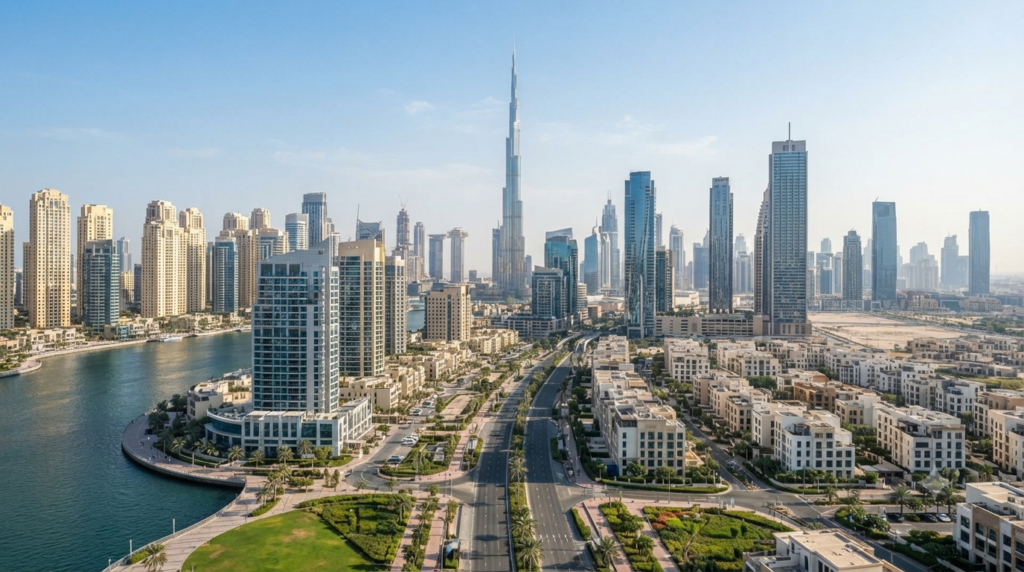
Location determines the quality of your investment more than any other single variable. Different areas deliver different yield levels, appreciation rates, and tenant profiles.
Choosing the right area before shortlisting specific properties is the most important strategic decision you make when you invest in Dubai property.
Dubai Marina and JLT
Dubai Marina is the benchmark location for yield-focused London investors. Gross yields on Marina apartments consistently range from 7 to 9%, depending on unit size and floor level. The professional expatriate tenant base creates stable, low-vacancy occupancy year-round.
Jumeirah Lake Towers sits directly across Sheikh Zayed Road from the Marina. JLT offers slightly lower entry prices with comparable rental demand from business professionals and consultants. Both areas have deep secondary markets, meaning exit liquidity is strong if your investment goals change.
Downtown Dubai & Business Bay
Downtown Dubai delivers the strongest capital appreciation of any area in the Dubai property market. Prime units in several Downtown buildings have recorded gains above 40% since 2020, according to Knight Frank research. This is primarily a growth play for London investors with higher budgets and longer horizons.
Business Bay sits adjacent to Downtown and offers lower entry prices with comparable central location advantages. Strong commercial activity in Business Bay drives residential demand from professionals who want to live close to their workplace. Gross yields here typically range from 6 to 8%.
Dubai South
Dubai South is the long-term appreciation play. Direct proximity to Al Maktoum International Airport positions the area for significant residential demand growth over the next decade. Dubai Airports has confirmed the expansion plan that will make Al Maktoum one of the world’s largest aviation hubs. Entry prices remain relatively accessible compared to established prime areas.
Area comparison for London investors:
- Dubai Marina: gross yields 7 to 9%, deep liquidity, professional tenant base
- Downtown Dubai: capital appreciation focus, 40%+ gains since 2020 in prime units
- Business Bay: gross yields 6 to 8%, central location, accessible entry prices
- JVC: gross yields 8 to 10%, entry from £91,000, yield-first focus
- Dubai South: long-term growth play, airport expansion driver, accessible entry prices
Selecting the right area is the foundation of a profitable decision to invest in Dubai property. Your Bright Realty advisor at the Dubai Property Show London will match you to the right location based on your goals.
How to Invest in Dubai Property Step by Step

The process to invest in Dubai property as a UK national is well-regulated and straightforward. It does not require UAE residency, a local partner, or a UAE bank account to complete the purchase.
Following each step in sequence protects your capital and removes the friction that comes from managing structural issues after committing.
Step One: Set Your Budget and Objective
Decide what you are investing in before looking at any property. Rental yield, capital appreciation, Golden Visa eligibility, or portfolio diversification each point toward different areas and property types.
Entry points to invest in Dubai property start from approximately £75,000 for studio apartments in affordable communities. Off-plan payment plans typically require only 10 to 20% upfront. This means you can secure a Dubai property with as little as £7,500 to £15,000 as an initial deposit in many cases.
Step Two: Choose Your Ownership Structure
Structure is the most overlooked decision when London investors first invest in Dubai property. Personal ownership is simple and suitable for single-property investors at the lower budget end. UK Ltd company ownership is more tax-efficient for higher-rate taxpayers and investors building a multi-property portfolio.
For a full breakdown of ownership structures available to UK investors, read our detailed guide on buying property in Dubai from the UK. Getting this right before you sign anything protects your net return for the entire investment lifecycle.
Step Three: Select a RERA-Licensed Developer
Only invest in Dubai property through developers registered with the Real Estate Regulatory Authority. You can verify any developer’s RERA license at dubailand.gov.ae in under five minutes. This is a non-negotiable step for any overseas buyer.
Developers attending the London expo include Emaar, DAMAC, Binghatti, Imtiaz, Ellington, and Omniyat.
Step-by-step process to invest in Dubai property from the UK:
- Define your investment objective and budget before shortlisting any property
- Choose your ownership structure with a UK accountant before signing anything
- Verify all developers through the RERA registry at dubailand.gov.ae
- Instruct a UAE property lawyer to review your Sales Purchase Agreement
- Pay your reservation deposit into a RERA-regulated escrow account only
- Follow your staged payment schedule tied to construction milestones
- Appoint a Dubai property management company before handover
- Declare all rental income to HMRC on your annual self-assessment return
Each step in this sequence builds protection for your capital. Skipping any step is where overseas property investors most commonly encounter problems.
Yields and Returns When You Invest

Return expectations should always be grounded in verified data. Here is an honest picture of what London investors achieve when they invest in Dubai property in the current market.
These figures draw on publicly available data from credible third-party sources so you can assess them independently.
Rental Yield Performance
Rental yields are the most immediate return metric when you invest in Dubai property. Gross yields across Dubai’s prime residential areas average 8 to 12%, depending on location and property type.
Compare this to London buy-to-let. Gross yields across most London boroughs average 3.5 to 5%. After mortgage interest restrictions, letting agent fees, and higher rate income tax, net returns for many London landlords fall below 2%. When you invest in Dubai property, even the net return after UK tax obligations significantly outperforms London alternatives.
Capital Appreciation
Capital appreciation has been a major component of total return for investors who chose to invest in Dubai property after 2020. According to Knight Frank’s Global Residential Cities Index, prime Dubai residential prices rose over 16% in 2024 alone. Cumulative appreciation since 2020 exceeds 40% in several key areas.
This growth is underpinned by the same population growth and supply constraints driving rental demand. It is structural, not speculative. Investors who invest in Dubai property in well-located communities today are positioned for continued appreciation as the population growth trajectory toward 5.8 million residents continues.
Total Return Comparison
A side-by-side comparison illustrates the Dubai advantage clearly. A £200,000 London buy-to-let property generating 4% gross returns of £8,000 annually before costs. A comparable £200,000 Dubai investment generating 9% gross returns of £18,000 annually before costs. After costs and UK tax, the Dubai investment typically delivers 3 to 4 times the net annual return of its London equivalent.
Summary of expected returns when you invest in Dubai property:
- Gross rental yield: 7 to 12% depending on area and property type
- Net yield after management fees: 6 to 9% in the strongest performing areas
- Capital appreciation in prime areas: over 40% cumulative since 2020
- UAE tax on rental income: zero
- UK income tax on net rental profit: at your marginal rate with allowable deductions
- Total transaction costs: approximately 5 to 6% of purchase price
For a full picture of the Dubai property market driving these returns, read our Dubai property market 2026 briefing.
Frequently Asked Questions
How much do I need to invest in Dubai property from the UK?
Entry-level studio apartments start from approximately £75,000. Off-plan payment plans typically require only 10% upfront. This means you can secure a Dubai property with an initial outlay of as little as £7,500 in some developments. For the full process from reservation to title deed, read our guide on how to buy property in Dubai.
Is it safe for UK nationals to invest in Dubai property?
Yes. The Dubai Land Department registers all freehold transactions and issues legally binding title deeds. RERA mandatory escrow requirements protect all off-plan buyer payments throughout construction. Buying from RERA-licensed developers in designated freehold zones gives UK investors the same legal protections as any other buyer in the Dubai market.
Do I need to visit Dubai to invest in Dubai property?
Not necessarily. Many London investors complete their Dubai purchase without travelling to the UAE. The Dubai Property Show London allows you to meet developers and begin the purchase process in London. For more on UK buyer rights, read our guide on” Can you buy property in Dubai as a UK citizen.
Can investing in Dubai property qualify me for UAE residency?
Yes. Purchasing an eligible property above AED 2 million qualifies you for a 10-year UAE Golden Visa. This grants residency rights for you and your immediate family. Read our complete guide on buying property in Dubai and getting UAE residency for the full eligibility and application process.
What is the best area to invest in Dubai property in 2026?
The best area depends on your objective. JVC delivers the strongest yields at entry-level budgets. Downtown Dubai offers the strongest capital appreciation track record. Dubai Marina balances yield and liquidity for most investor profiles. Dubai South offers the strongest long-term growth story driven by airport expansion. Your advisor at the Dubai Property Show London will match you to the right area based on your specific goals.
Ready to Invest in Dubai Property From London?
The case to invest in Dubai property in 2026 is backed by record transaction volumes, strong rental yields, structural population growth, and a zero-tax environment that amplifies every pound of return. The process is straightforward, the legal protections are solid, and the entry points are more accessible than most London investors expect.
The Dubai Property Show London 2026 is your most direct route to getting started. Meet RERA-licensed developers, explore over 100 verified projects from £75,000, and receive personalised advice from UK-to-Dubai investment specialists.
Register your free place today at dubaipropertyexpolondon.co.uk.