London investors allocating capital overseas have more options than ever. Yet one market keeps appearing at the top of every serious comparison. The Dubai property market in 2026 is posting numbers that most developed-world real estate markets cannot come close to matching.
Record transaction volumes. Rental yields of 8 to 12%. Population growth consistently outpaces new housing supply. A zero-tax environment that amplifies every dirham of return.
This briefing covers the full picture. Where the Dubai property market stands in 2026, which areas are performing strongest, what is driving sustained demand, and what London investors should understand before committing capital to the UAE.
Where Does the Dubai Property Market Stand in 2026?
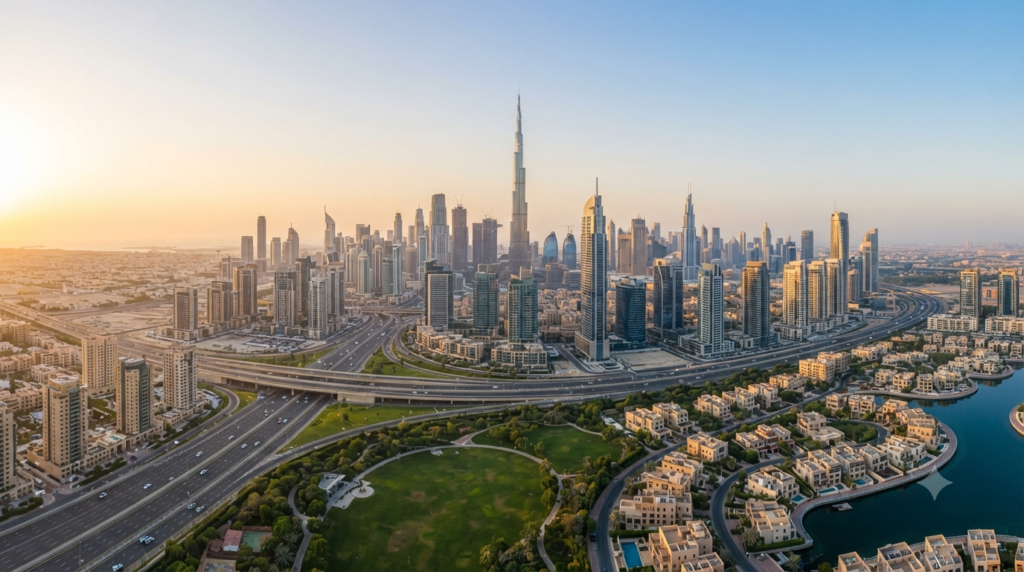
The Dubai property market has been in a sustained growth cycle since 2021. Unlike the speculative run-up seen before the 2008 crash, this cycle is underpinned by real population growth, genuine end-user demand, and a diversified economy that is no longer solely dependent on oil revenues.
According to the Dubai Land Department, residential transaction volumes reached record highs in 2024, with over 180,000 transactions recorded across all property types. That figure represented a year-on-year increase of over 20% and marked the fifth consecutive year of volume growth.
The market has matured considerably since the volatility of 2008 and 2014. Regulatory reforms, mandatory escrow requirements, and a more disciplined developer community have created a more stable foundation for sustained price growth.
Is the Dubai Property Market Overheating?
This is a legitimate question and one that every responsible London investor should ask before allocating capital. The evidence suggests the market is supply-constrained rather than speculation-driven.
Dubai’s population grew from approximately 3.3 million in 2020 to over 3.8 million by the end of 2024, according to the Dubai Statistics Center. Projections from the Dubai Urban Master Plan 2040 target a population of 5.8 million by 2040. That trajectory requires a substantial and sustained increase in residential housing stock.
Current delivery pipelines, while expanding, have not caught up with demand in key residential corridors. This supply-demand imbalance is the structural driver behind price resilience in the Dubai property market, not speculative buying.
Dubai Property Market Performance by Area
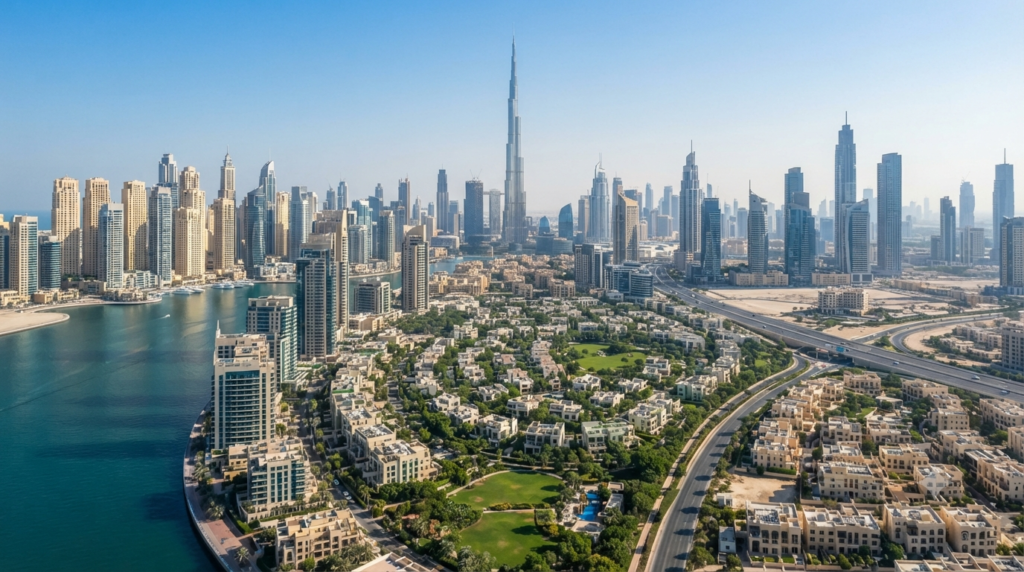
Not all areas of Dubai perform equally. London investors benefit from understanding where the strongest returns are being generated and why.
Dubai Marina
Dubai Marina remains one of the highest-performing residential areas in the Dubai property market for rental yield. Gross yields on well-located apartments consistently range from 7 to 9%. Strong demand from professional expatriates and short-term rental platforms keeps occupancy rates high year-round.
The area has a deep secondary market, meaning resale liquidity is stronger here than in newer or more peripheral communities. For London investors prioritising yield and exit flexibility, Dubai Marina is a reliable anchor.
Downtown Dubai
Downtown Dubai commands the highest per-square-foot prices in the residential Dubai property market. Properties here attract premium long-term tenants and international buyers seeking prestige addresses. Capital appreciation in Downtown has been particularly strong over the past four years, with prime units in some buildings recording gains above 40% since 2020.
This is primarily a capital growth play for London investors rather than a yield-first strategy. Entry prices are higher, but the asset quality and demand fundamentals are among the strongest in the city.
Dubai Hills Estate
Developed by Emaar, Dubai Hills Estate has emerged as one of the most consistently in-demand communities in the Dubai property market over the past three years. The combination of green space, family-oriented amenities, and strong school options has driven sustained occupancy from long-term residential tenants.
Gross yields on apartments in Dubai Hills typically range from 6 to 8%. Townhouses and villas offer stronger capital appreciation potential. For London investors wanting a balanced yield and growth profile, Dubai Hills represents one of the most compelling options in the current market.
Business Bay
Business Bay sits adjacent to Downtown Dubai and offers a more accessible entry point into the prime central Dubai property market. Strong rental demand from business professionals and relatively lower purchase prices than Downtown create an attractive yield dynamic.
The ongoing commercial development of Business Bay continues to drive residential demand. Several of the developers featured at the Dubai Property Show London, including Omniyat and Binghatti, have active projects in Business Bay that are generating significant interest from UK investors.
Jumeirah Village Circle
JVC has established itself as the go-to area in the Dubai property market for yield-maximising investors on a tighter budget. Entry prices for well-located apartments can be significantly below those in Marina or Downtown, while gross yields of 8 to 10% are commonly achievable.
The trade-off is slower capital appreciation compared to prime central areas. For investors prioritising cash flow over long-term growth, JVC delivers some of the strongest net yield numbers in the entire market.
Dubai South and Expo City
Dubai South is the long-term growth play in the Dubai property market for 2026 and beyond. The planned expansion of Al Maktoum International Airport into one of the world’s largest aviation hubs is expected to drive a significant increase in residential and commercial demand across this corridor over the next decade.
Entry prices remain relatively accessible. London investors with a 7 to 10-year horizon and a higher risk tolerance for emerging locations are finding Dubai South increasingly compelling.
What Is Driving Dubai Property Market Growth in 2026?
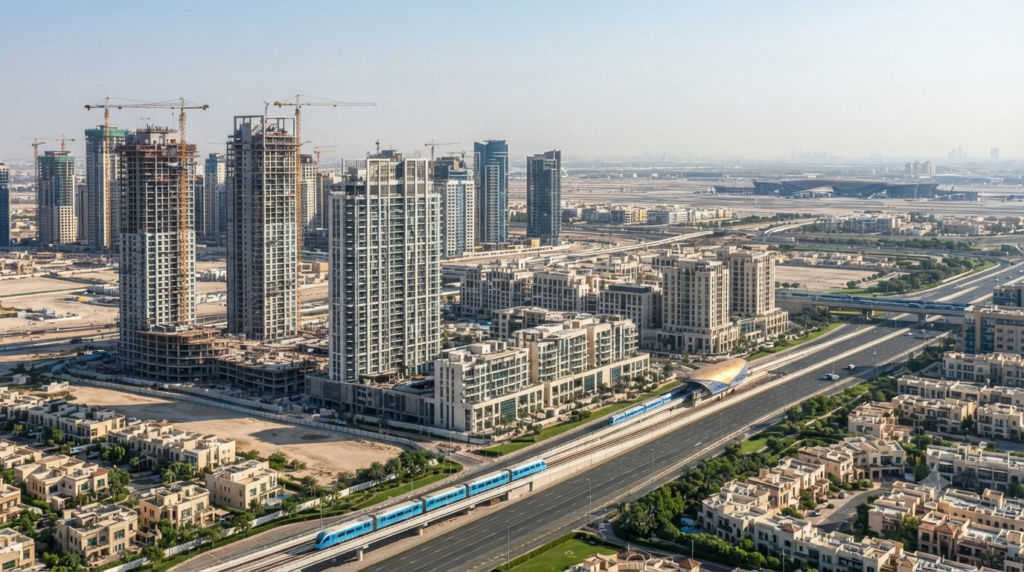
Understanding the drivers behind the Dubai property market helps London investors assess sustainability and time their entry intelligently.
Population Growth Outpacing Supply
As noted above, Dubai’s population is growing faster than new housing stock is being delivered in key areas. This is the single most important structural driver of the current market. When demand consistently exceeds supply, prices and rents rise. That dynamic is firmly in place across most prime Dubai residential areas.
Global Wealth Migration to Dubai
Dubai has become one of the world’s top destinations for high-net-worth individual relocation. According to Henley and Partners’ 2024 Global Wealth Migration Review, Dubai ranked as the number one city globally for net inflows of millionaires. This concentration of wealth drives demand at the premium end of the Dubai property market and elevates values across the board.
Zero Tax Environment Attracting International Investors
The UAE’s zero personal income tax and zero capital gains tax environment continues to attract investors from high-tax jurisdictions, including the UK, Europe, and India. For London investors specifically, the contrast between 40 to 45% marginal UK income tax rates and zero UAE tax on rental income is a powerful pull factor that shows no sign of reversing.
Tourism and Short-Term Rental Demand
Dubai welcomed over 17 million international visitors in 2023, according to the Dubai Department of Economy and Tourism, with 2024 figures expected to exceed this. This visitor volume sustains strong short-term rental demand, particularly in Marina, Downtown, and Palm Jumeirah. Investors in these areas benefit from both long-term and short-term rental market optionality.
Infrastructure and Connectivity Investment
The UAE government continues to invest heavily in infrastructure. The Dubai Metro expansion, the Al Maktoum Airport development, and ongoing master-planned community completions all contribute to rising residential demand in connected corridors. Infrastructure investment in Dubai is a reliable leading indicator of residential price appreciation in adjacent areas.
Dubai Property Market vs London Property Market in 2026
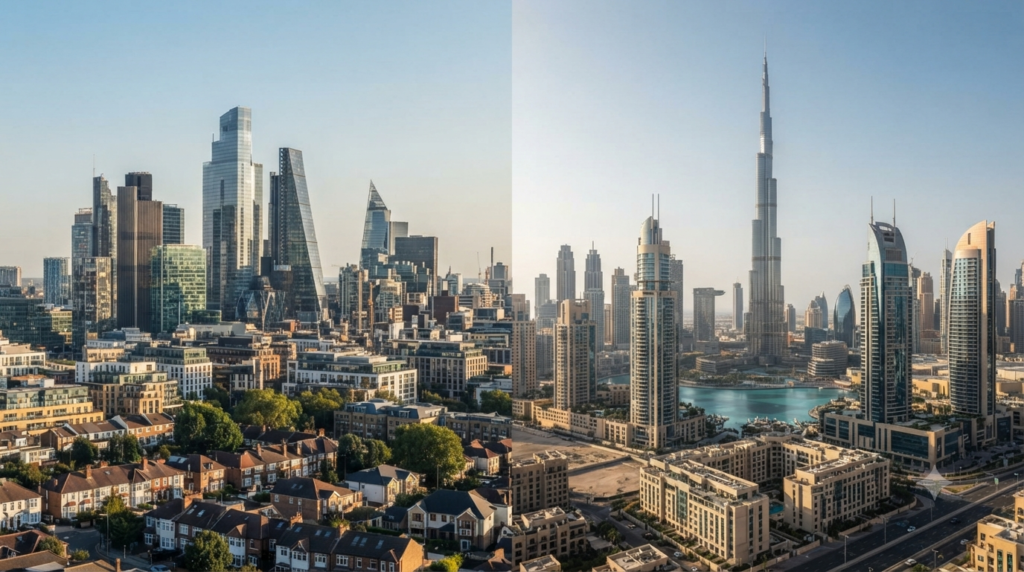
London investors naturally benchmark Dubai against what they know. Here is a direct comparison of the metrics that matter most.
Rental Yield
Dubai gross rental yields average 8 to 12%, depending on area and property type. London gross rental yields average 3.5 to 5% across most boroughs, with central London often lower. On a net basis, after management fees and UK tax obligations, Dubai still materially outperforms London for most investor profiles.
Transaction Costs
Buying in Dubai costs approximately 5 to 6% in transaction fees, primarily the 4% DLD registration fee. Buying an additional residential property in London above £40,000 triggers a minimum 5% stamp duty rate under current HMRC rules, rising to 12% on the portion above £1.5 million for second properties. Dubai’s transaction cost structure is considerably simpler and, in many cases, cheaper.
Capital Appreciation
Prime Dubai residential properties have delivered over 40% capital appreciation since 2020 in several key areas, according to Knight Frank research. Prime central London residential values have been broadly flat to modestly positive over the same period, constrained by high mortgage rates, stamp duty burdens, and demand softness from domestic buyers.
Regulatory Environment
Both markets are well-regulated. Dubai’s RERA framework provides strong buyer protections, particularly for off-plan purchases. The UAE’s political stability and government commitment to the property sector add a layer of confidence that many emerging market alternatives cannot offer.
Frequently Asked Questions
Is the Dubai property market still a good investment in 2026?
Yes, based on current fundamentals. Population growth, supply constraints in key areas, sustained rental demand, and a zero-tax investment environment continue to drive strong returns. The market is more mature and regulated than in previous cycles, reducing speculative risk for long-term investors.
Which area of Dubai has the highest rental yield in 2026?
Jumeirah Village Circle and Dubai Marina consistently produce some of the highest gross rental yields in the Dubai property market, ranging from 8 to 10% and 7 to 9%, respectively. The best yield for a specific property depends on its size, condition, and management quality.
Are Dubai property prices still rising in 2026?
Based on the trajectory established through 2024 and the structural demand drivers outlined above, price growth is forecast to continue across most prime areas. Knight Frank and other major research houses have published continued growth projections for the Dubai property market through 2026. Market conditions should always be confirmed with current data at the point of purchase.
How does the Dubai property market compare to the UK for investors?
Dubai offers significantly higher rental yields, lower transaction costs, zero local tax on income and gains, and stronger capital appreciation in recent years compared to UK residential property. The trade-off is currency risk, geographic distance, and additional tax compliance requirements for UK residents.
How do I access the Dubai property market as a London investor?
The most direct route for London investors is attending the Dubai Property Show London 2026. You can meet verified developers, review over 100 curated projects, and receive personalized advice from specialists who understand both the Dubai market and the UK investor’s specific tax and financial context.
Ready to Enter the Dubai Property Market From London?
The Dubai property market in 2026 offers London investors a combination of yield, growth, and structural demand that no domestic alternative can match. The fundamentals are strong, the regulatory framework is solid, and the entry points remain accessible starting from £125,000.
The Dubai Property Show London is your direct route into this market. Meet the developers behind Dubai’s biggest projects, explore verified investment opportunities, and get expert advice tailored to your situation as a UK investor.
Register your free place today at dubaipropertyexpolondon.co.uk.