Quick Answer
- Dubai South properties offer UK buyers full freehold ownership rights.
- Entry prices start near AED 450,000, roughly £97,000 at mid-2026 rates.
- Gross rental yields average 6.5 to 7.5 percent across the district.
- A $35 billion airport expansion is the core long-term growth driver.
- Purchases above AED 2 million can unlock a ten-year UAE Golden Visa.
Dubai South is no longer just a future story. It is an active investment market that serious UK buyers are watching closely in 2026. A $35 billion airport expansion, rising transaction volumes, and below-average entry prices make Dubai South properties a compelling case. The area connects infrastructure, income, and long-term capital growth in a way few districts can match.
Many UK investors feel uncertain about areas they have not visited. This guide removes that barrier. It delivers verified 2026 data on prices, yields, buying steps, and costs. Every figure is sourced from current market records. That way you can judge Dubai South properties with confidence and clarity from London.
This blog covers the full picture for UK buyers. We explain why Dubai South properties stand out in 2026. You will also find price data, yield figures, and buying-process steps. We also compare buying strategies and answer the questions UK investors ask most often.
Why Choose Dubai South?
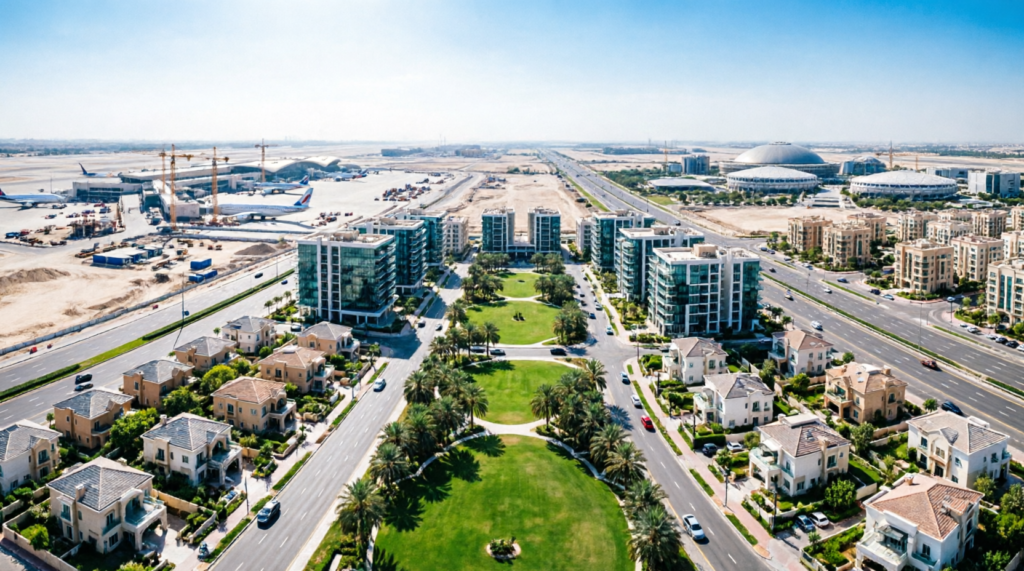
Not every Dubai district has a reason to keep growing beyond its launch hype. Dubai South properties do. The area is built around genuine infrastructure, not marketing alone. Three factors give it a durable investment case for UK buyers.
Airport Growth
The anchor of the entire district is Al Maktoum International Airport. The project carries a budget of $35 billion (AED 128 billion). Phase 1 targets a capacity of 150 million passengers per year by 2032. At full buildout, the airport will handle 260 million passengers annually, making it the world’s largest. Emirates has confirmed it will relocate all operations there from Dubai International. Contracts worth AED 13 billion are already under execution, with a further AED 55 billion to be awarded shortly. This scale of committed spending underpins the growth story for Dubai South properties directly.
Expo City Boost
Expo City Dubai adds a second engine to the district. It brings innovation, sustainability events, and business activity to the southern corridor. That gives Dubai South properties something rare: more than one economic driver at work. Residential demand grows faster when a district has cultural and commercial relevance alongside logistics and aviation. The Expo City footprint strengthens the area’s long-range identity and keeps it on the radar of international businesses.
Freehold Access
Dubai South is a designated freehold zone. UK nationals can buy and own property outright without a local partner. Ownership is registered at the Dubai Land Department with a title deed in the buyer’s name. There is no annual property tax, no capital gains tax, and no inheritance tax in Dubai. This legal clarity makes Dubai South properties genuinely accessible to British investors. For the wider context on the 2026 market, see our Dubai property market overview.
Together, airport growth, Expo momentum, and freehold rights create a durable investment case. Each factor reinforces the others. The next question for most UK buyers is what prices actually look like.
What Do Properties Cost?
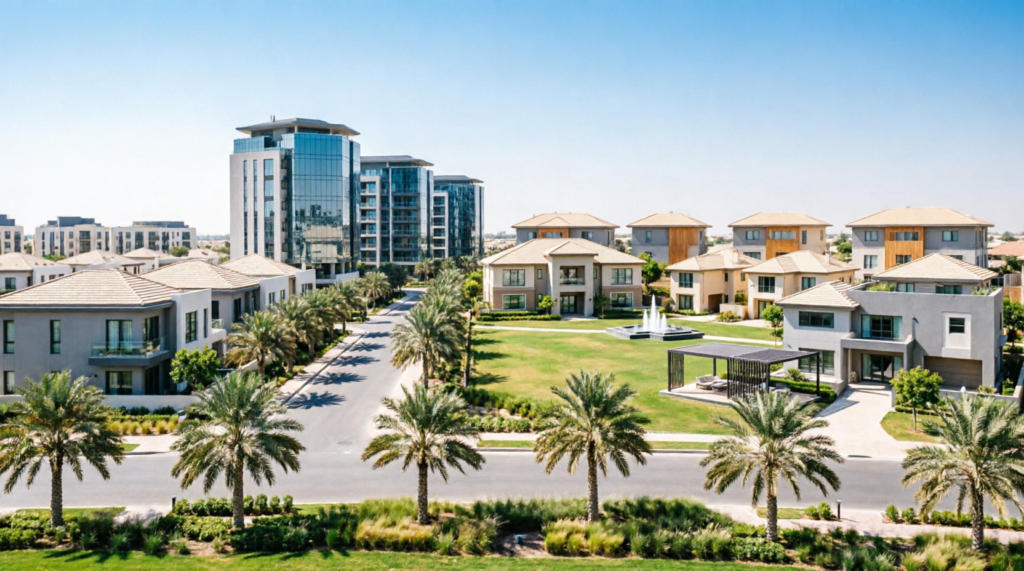
Dubai South properties are priced well below the Dubai average. That gap is a key attraction for UK buyers who want growth potential without an overextended budget. The table below shows indicative 2026 prices in both AED and GBP.
Dubai South indicative prices, 2026
| Unit Type | Price From (AED) | Price From (GBP) | Notes |
| Studio | AED 450,000 | £97,000 | Highest yield, easy entry |
| 1-Bedroom | AED 700,000 | £151,000 | Professionals and couples |
| 2-Bedroom | AED 1,200,000 | £258,000 | Families and sharers |
| 3-Bedroom | AED 1,900,000 | £409,000 | Larger family homes |
| Townhouse | AED 2,000,000 | £430,000 | Community living, Golden Visa |
The table highlights the broad range of entry points available in Dubai South. Buyers can choose from affordable, high-yield apartments or larger family homes depending on their budget and investment goals.
Apartment Prices
Apartments are the primary entry point for UK investors in Dubai South. Prices per square foot run roughly AED 800 to 1,100 across the district. That compares to over AED 2,000 per square foot in Dubai Marina and over AED 3,000 in Downtown Dubai. A studio starts near AED 450,000. A one-bedroom apartment begins around AED 700,000. These prices make Dubai South properties accessible at multiple budget levels.
Villa Prices
Villas and townhouses in Dubai South have recorded stronger price growth than apartments over the past year. PalmObserver data shows the villa segment outpacing apartments in percentage appreciation. Townhouses start near AED 2 million, which also meets the Golden Visa threshold. Villas sit higher, depending on community and plot size. Emaar South, a prominent sub-community, commands a premium for its golf course setting and brand credibility.
Transaction Volume
Transaction data confirms genuine demand. Dubai South recorded over AED 15 billion in property transactions in just the first five months of 2025. That exceeded the AED 16.1 billion total for all of 2024. This pace of activity reflects real buyer and investor conviction, not just speculation. For UK buyers, transaction depth also means better liquidity when you decide to sell.
In summary, Dubai South properties sit at a significant discount to central Dubai. The pricing gap is real and well documented. Once the price is clear, most UK buyers focus on what income the property can generate.
What Yields Can I Expect?
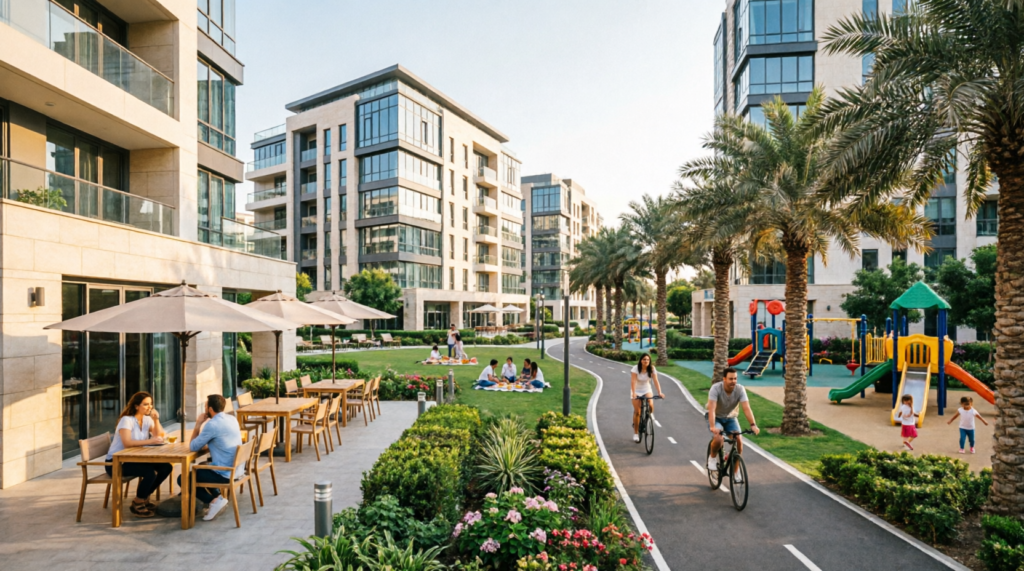
Rental yield is where Dubai South properties genuinely compete. The area delivers returns that beat most UK buy-to-let markets. Below are the 2026 yield figures UK buyers should use when modelling Dubai South properties.
Dubai South gross rental yields
| Unit Type | Gross Yield | Typical Annual Rent (AED) |
| Studio | 7.0% to 7.5% | AED 31,500 to 37,500 |
| 1-Bedroom | 6.5% to 7.0% | AED 45,500 to 56,000 |
| 2-Bedroom | 6.5% to 7.0% | AED 78,000 to 90,000 |
| 3-Bedroom | 6.0% to 6.5% | AED 114,000 to 133,000 |
| Townhouse | 5.5% to 6.5% | Varies by sub-community |
The figures show that smaller units typically generate the strongest rental yields, while larger homes offer a balance between steady income and long-term capital appreciation.
Gross Yields
Gross yields in Dubai South properties run between 6.5 and 7.5 percent in 2026. Studios and one-bedroom units lead on percentage yield. Larger homes yield slightly less but appreciate more over time. By comparison, UK buy-to-let gross yields average 4 to 5 percent in most cities. Dubai South also applies zero tax on rental income at the UAE level. That combination of higher yield and zero tax is a key draw for UK investors.
Net Returns
Net yield is more meaningful than the headline gross figure. Deduct service charges, agent management fees, and vacancy gaps to reach net income. Service charges in Dubai South apartments typically run AED 8 to 14 per square foot per year. Net yields generally land near 5 to 6 percent.
- Service charges: AED 8 to 14 per square foot annually.
- Agent management fees: roughly 5 to 8 percent of annual rent.
- Typical vacancy buffer: 5 to 8 percent depending on sub-community.
- Net yield after all costs: approximately 5 to 6 percent.
That is still a strong result by global standards. Dubai South properties reward buyers who model costs carefully before committing.
Growth Potential
Beyond rental yield, Dubai South properties carry a capital growth thesis. Each airport construction milestone adds value to surrounding residential stock. Market analysts forecast 5 to 8 percent annual price growth linked to infrastructure delivery phases. Early buyers who entered before 2022 have seen significant gains.
Buyers entering now face a market where more infrastructure is in place but further phases still lie ahead. The strongest long-term case is buying with both income and growth in mind.
To sum up, Dubai South properties offer rare income strength combined with a capital growth thesis. Both drivers are evidenced by 2026 market data. The next logical question is how to actually buy.
How Do UK Buyers Purchase?
Buying Dubai South properties from London is more straightforward than most UK investors expect. The process is regulated and can be completed remotely. You do not need UAE residency or a local partner. Here are the steps, costs, and residency benefits.
Legal Steps
The purchase path for UK nationals follows a clear sequence. Our full guide on how to buy property in Dubai covers each stage in detail.
- Choose a property and agree the price and terms with the seller or developer.
- Sign a Memorandum of Understanding and pay a booking deposit of around 10 percent.
- Obtain a No Objection Certificate from the developer if on the secondary market.
- Transfer ownership at the Dubai Land Department trustee office.
- Receive your title deed; the property is registered in your name.
A qualified agent or conveyancer can manage all of this remotely. Many UK buyers complete the entire purchase without visiting Dubai. This makes Dubai South properties particularly accessible for London investors.
Costs Involved
One-off buying costs for a UK buyer in Dubai South
| Cost Item | Rate or Amount | Notes |
| DLD transfer fee | 4% of price | Paid once at registration |
| Agent commission | 2% plus 5% VAT | On secondary purchases |
| Registration fees | AED 4,200 to 5,500 | Admin and trustee office |
| Title deed | AED 580 | Issued at DLD |
| Mortgage reg fee | 0.25% plus AED 290 | Only if using finance |
Total one-off buying costs in Dubai South sit near 5 to 7 percent of the purchase price. Dubai charges no annual property tax and no capital gains tax. Our page on buying property in Dubai from the UK breaks these costs down fully. For income investors, this low-cost structure means more rent goes into your pocket each year.
Golden Visa
Dubai South properties are well placed for the Golden Visa route. A purchase above AED 2 million qualifies for the ten-year renewable UAE residency visa. That threshold equals roughly £430,000 at mid-2026 exchange rates. A family townhouse in Dubai South often meets this level. The visa covers your spouse and children. Learn how to buy property in Dubai and secure UAE residency in our dedicated guide.
In short, buying Dubai South properties is well structured, cost-effective, and transparent. UK buyers gain both a productive asset and an optional residency route. The final decision is which buying strategy to use.
Which Buying Strategy Works?
UK buyers in Dubai South have two main routes: ready-built property or off-plan. Each suits a different investment goal and timeline. Choosing correctly shapes what your Dubai South properties will deliver.
Ready vs off-plan Dubai South properties
| Factor | Ready Property | Off-Plan Property |
| Entry price | Market rate | 10% to 20% below market |
| Rental income | From day one | After handover |
| Payment | Full or mortgage | Staged developer plans |
| Main advantage | Immediate income | Lower cost and growth |
| Best for | Income investors | Long-term growth buyers |
The comparison highlights the trade-offs between immediate rental income and long-term capital growth. Choosing the right option depends on your investment timeline and financial objectives.
Ready Units
Ready homes generate rental income from day one. You can inspect the exact unit, check the building quality, and compare live rental comparables before buying. Ready Dubai South properties also qualify immediately for the Golden Visa above AED 2 million. This suits UK investors who want cash flow quickly and prefer to see what they are buying. Income-focused buyers tend to prefer this route.
Off-Plan Deals
Off-plan means buying before or during construction. Prices can sit 10 to 20 percent below the completed value of similar units. Developers offer flexible staged payment plans, often requiring just 10 percent down to reserve. Buyer funds are held in mandatory RERA escrow accounts. Off-plan property in Dubai suits growth-oriented investors who are comfortable waiting for handover and want early-cycle pricing.
Emaar South Picks
Within Dubai South, the Emaar South sub-community is the most frequently chosen by UK investors. It offers:
- An 18-hole championship golf course at the heart of the community.
- Green open spaces, parks, and cycling tracks through the neighbourhood.
- Emaar’s track record for quality delivery and strong resale value.
- A family-friendly environment with schools and retail nearby.
Beyond Emaar South, buyers should assess the exact developer, handover timeline, and sub-community maturity before committing. Not all Dubai South properties perform equally. Careful project selection matters as much as area selection.
Investing in Dubai property requires disciplined due diligence at building level, not just area level. Both ready and off-plan routes can work well in Dubai South. Your goal, budget, and timeline should determine the choice. The area rewards clear thinking.
Are Dubai South Properties Right?
Dubai South properties offer UK buyers a rare combination in 2026. Entry prices sit well below the Dubai average. Gross yields run 6.5 to 7.5 percent in a zero-tax environment. A $35 billion airport expansion provides a credible long-term growth driver. Few global markets combine income, growth, and legal simplicity this effectively for overseas investors.
For London investors, the case is evidence-based and transparent. Transaction volumes, yield data, and airport construction progress are all verifiable from public sources. You can buy Dubai South properties remotely, tax efficiently, and with a clear legal process. The Golden Visa route adds an optional residency benefit above AED 2 million. All these factors make the area worth serious attention.
The best next step is to meet verified developers face to face. The Dubai Property Show London puts active Dubai South projects in front of you with no pressure. Register your free place now at the Dubai Property Show London. Book today and start building your Dubai South investment strategy.
Frequently Asked Questions
Are Dubai South properties a good investment for UK buyers?
Yes, Dubai South properties offer a strong case for UK investors in 2026. Gross yields run 6.5 to 7.5 percent, and a $35 billion airport expansion underpins growth. Entry prices sit well below the Dubai average. There is no annual property tax or capital gains tax in Dubai. For UK buyers who want income and growth together, Dubai South properties sit high on the shortlist.
Can UK nationals buy property in Dubai South?
Yes, Dubai South is a designated freehold zone open to UK nationals and all foreign buyers. You need no UAE residency, local partner, or local bank account to purchase. Ownership is registered with a title deed at the Dubai Land Department. Dubai South properties are fully and legally accessible to British investors.
What is the minimum budget to buy in Dubai South?
The entry point for Dubai South properties starts near AED 450,000, or roughly £97,000 at mid-2026 rates. That buys a studio apartment in a newer community. One-bedroom apartments begin around AED 700,000. Townhouses start near AED 2 million, which also meets the Golden Visa threshold. Dubai South offers genuine choice across a wide range of UK budgets.
What rental yields do Dubai South properties generate?
Gross rental yields in Dubai South properties run approximately 6.5 to 7.5 percent in 2026. Studios and one-bedroom units usually lead on percentage. Net yields after service charges and management fees typically land near 5 to 6 percent. Both figures beat average UK buy-to-let yields, and Dubai charges no tax on rental income at the UAE level.
How does the airport expansion affect property values?
The Al Maktoum International Airport expansion is a direct driver of value growth for Dubai South properties. The $35 billion project will create the world’s largest airport by passenger capacity. Each construction phase generates employment, tenant demand, and business activity that supports residential values. Phase 1 targets 150 million passengers per year by 2032. Analysts forecast 5 to 8 percent annual price growth tied to infrastructure delivery milestones.