Quick Answer:
-
Dubai property investment gives UK buyers access to residential and commercial opportunities in designated ownership areas.
-
Dubai recorded AED 252 billion in real estate transactions during Q1 2026.
-
The best location depends on your budget, rental strategy, property type, and investment timeframe.
-
UK investors should consider purchase costs, rental income, financing, currency movements, and potential UK tax obligations.
-
Buyers should verify the property, developer, broker, fees, contract, and ownership status before committing funds.
Dubai has become a major destination for international property investors. Dubai property investment can give UK buyers access to residential, luxury, and off-plan opportunities.
However, buying overseas property requires more than comparing advertised prices. Investors should understand purchase costs, rental demand, service charges, financing, currency movements, taxes, and exit options. Dubai Land Department reported AED 252 billion in real estate transactions during Q1 2026. This represented a 31% year-on-year increase in transaction value.
This guide explains what UK investors should know before buying. It covers the best areas, investment budgets, rental yields, buying costs, mortgages, taxes, off-plan properties, risks, and exit strategies.
You will also learn how to invest in Dubai property while assessing the factors that can affect your potential returns. For broader market information, explore our Dubai Property Index 2026 guide.
Is Dubai Property Investment Worth It?
There is no universal answer for every investor. A property can perform differently depending on its location, price, tenant demand, and expenses.
Dubai's overall transaction activity provides useful market context. It does not guarantee appreciation or rental returns for individual properties. Investors should therefore assess each opportunity against their own objectives.
Understand The Market
Dubai recorded 60,303 real estate transactions during Q1 2026. Investment reached AED 173 billion across 57,744 transactions.
These figures show strong market activity. They should not be treated as a forecast for individual property performance. Property-level research remains essential.
Choose Your Strategy
Different investors may pursue different approaches.
-
Rental income: Focus on tenant demand, purchase price, service charges, and realistic net income.
-
Capital growth: Consider location, infrastructure, supply, and long-term demand.
-
Off-plan growth: Review the developer, payment structure, project registration, and handover expectations.
-
Luxury property: Consider premium demand, entry price, rental income, and resale liquidity.
Your strategy should guide your location and property selection.
Assess The Fundamentals
Look beyond short-term price movements. Study employment, population trends, infrastructure, tourism, new supply, rental demand, and community quality. These factors can help you compare investment opportunities in Dubai more objectively.
Best Areas For Dubai Property Investment In 2026
Location can influence rental demand, purchase prices, tenant profiles, and resale potential. There is no single best area for every investor. Your choice should match your budget, target tenant, investment period, and preferred risk level.

Dubai Marina
Dubai Marina offers an established waterfront community with apartments, restaurants, retail, and leisure facilities. Its location can appeal to tenants seeking a central lifestyle with access to major parts of Dubai.
Investors should compare individual buildings because rents, service charges, and resale demand can vary.
Downtown Dubai
Downtown Dubai offers a premium central location close to major attractions and business districts. It can suit investors targeting premium tenants and buyers.
However, higher purchase prices can affect the relationship between rental income and invested capital.
Dubai Hills Estate
Dubai Hills Estate offers a master-planned community with residential properties, green spaces, retail, and family-oriented amenities. It may appeal to investors targeting longer-term residential demand.
Compare individual developments, property types, service charges, and rental evidence before purchasing.
Jumeirah Village Circle
Jumeirah Village Circle can appeal to investors looking for a broad range of apartment properties. Its price points and tenant market can differ from premium central communities.
Investors should compare actual rents with asking prices before calculating potential returns.
Dubai Creek Harbour
Dubai Creek Harbour is a waterfront master development near Dubai Creek and Ras Al Khor Wildlife Sanctuary. It combines residential communities with retail, dining, leisure spaces, and planned infrastructure.
The area can appeal to investors seeking newer residential properties and long-term community development. However, buyers should compare current prices, service charges, rental demand, project completion status, and available supply before investing.
Dubai Area Comparison
Different communities can suit different investment strategies. Use this comparison as a starting point rather than a guarantee of performance.
|
Area |
Suitable For |
|
Dubai Marina |
Waterfront rental demand |
|
Downtown Dubai |
Premium investors |
|
Dubai Hills Estate |
Long-term family demand |
|
Jumeirah Village Circle |
Entry-level investors |
|
Dubai Creek Harbour |
Future-focused waterfront investment |
Property prices, rental demand, and supply can change within each community. Compare individual buildings before making a decision.
How Much Do You Need To Invest?
There is no universal minimum for buying an investment property in Dubai.
Your required capital depends on the property price, financing, payment structure, transaction costs, and ownership expenses.
Do not treat the listing price as your complete investment budget.
Example Investment Budgets
The following ranges are examples for planning purposes. They are not guarantees of availability or returns.
|
Budget Range |
Possible Strategy |
Main Consideration |
|
AED 500,000–1 million |
Smaller apartments or entry-level opportunities |
Rental demand and service charges |
|
AED 1–2 million |
Apartments in established communities |
Purchase price versus rental income |
|
AED 2 million+ |
Larger units or premium locations |
Capital requirements and resale demand |
|
Higher budgets |
Luxury or larger residential properties |
Liquidity and premium tenant demand |
Actual opportunities can change by project and market conditions.
Build Your Full Budget
Include more than the property purchase price. Your calculation should consider registration costs, broker fees, mortgage expenses, furnishing, service charges, maintenance, management, and potential vacancies.
Dubai Land Department publishes applicable registration fees and real estate transaction requirements. Before committing funds, obtain current charges for the specific property.
Ready Property Vs Off-Plan
Both completed and off-plan properties can form part of a property strategy. The better option depends on your investment timeline and risk tolerance.
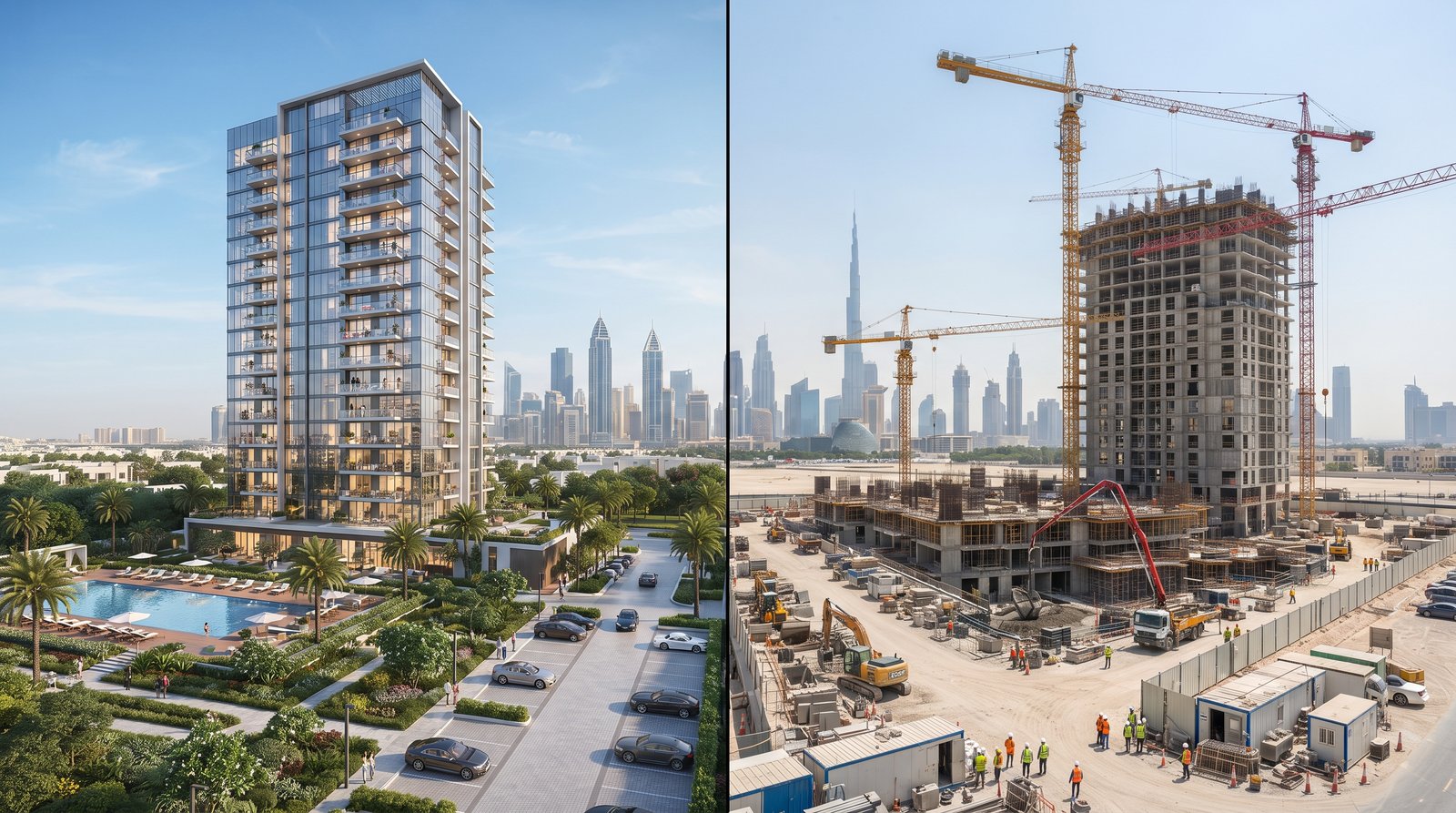
Ready Property
A completed property lets you inspect the actual unit and building. You can also examine existing rents, occupancy, service charges, building condition, and nearby competition. This can make property-level analysis easier.
Off-Plan Property
Dubai off plan properties can offer staged payment structures and access to new developments. However, buyers take on additional construction and handover risk.
Check the developer, project registration, payment schedule, escrow arrangements, and expected completion information before signing. The UAE Government confirms that foreign buyers can acquire freehold ownership in designated Dubai areas. Neither option guarantees better returns.
|
Factor |
Ready Property |
Off-Plan Property |
|
Physical inspection |
Available |
Usually unavailable |
|
Rental income |
Potentially sooner |
Usually after handover |
|
Payment structure |
Often more upfront |
Often staged |
|
Construction risk |
Lower |
Higher |
|
Handover risk |
Completed |
Future delivery |
|
Rental evidence |
Usually available |
Often projected |
|
Due diligence |
Property and building |
Developer and project |
Why UK Investors Consider Dubai Property
UK investors may consider Dubai for several reasons. The market provides access to international property, different residential segments, and designated areas where foreign ownership is permitted.
International Market Exposure
Dubai gives UK investors exposure to a property market outside the UK. That can diversify a property portfolio, although real estate investment in Dubai also involves international market risks.
For investors researching Dubai real estate investment, currency movements and overseas market exposure should form part of the wider assessment.
Rental Opportunities
Some investors target rental income rather than short-term resale. Rental demand can vary significantly between communities and property types. Always compare actual rental evidence with the property's total acquisition cost.
Lifestyle Potential
Some investors may eventually use their Dubai property personally.
Others may use it purely as an investment. The intended use can influence the preferred location, unit type, and ownership strategy.
Tax Needs Careful Planning
It is misleading to describe Dubai as simply "tax-free." UK tax residents may need to consider UK tax on overseas income. HMRC states that UK residents will normally pay UK tax on foreign income, subject to applicable rules and reliefs.
Speak with a qualified tax adviser about your individual circumstances.

How To Buy Property From The UK
The purchase process should begin with research and financial planning if you want to invest in Dubai real estate. Do not start with a reservation payment before understanding the property and contract.
Set Your Budget
Calculate your available capital and expected financing. Keep a reserve for transaction costs and ongoing ownership expenses.
Choose Your Property
Compare location, unit type, developer, rental demand, service charges, and resale potential. Do not compare properties using purchase price alone.
Verify The Property
Confirm ownership status, project details, developer information, broker credentials, and applicable fees. Foreign ownership is permitted in designated Dubai freehold areas.
Review The Contract
Understand the payment schedule, completion terms, fees, cancellation provisions, and other obligations. Consider professional legal advice before signing.
Complete The Transaction
Follow the applicable registration and transfer process. Dubai Land Department is the relevant government authority for property registration in Dubai.
Mortgage Options For UK Investors
Financing can change the amount of capital required and the final investment return. Mortgage eligibility depends on the lender and borrower's circumstances.
The Central Bank of the UAE sets maximum loan-to-value limits for different borrower and property categories. Its framework lists different limits for expatriates, investment properties, and off-plan properties. These are regulatory maximums rather than guaranteed bank offers.
What To Check
-
Deposit: Confirm the amount you must contribute from your own funds.
-
Interest rate: Compare the rate, period, and future changes.
-
Fees: Include arrangement and other financing charges.
-
Affordability: Consider your wider income and debt commitments.
-
Currency: Consider the impact of GBP and AED movements.
The Central Bank framework also provides maximum mortgage tenor requirements. Speak with a lender about your specific eligibility before selecting a property.
Rental Yield And Returns
Rental yield helps investors compare income potential between properties. However, gross yield does not represent the final amount an investor keeps.
What Is Rental Yield?
Gross rental yield compares annual rent with the purchase price. The calculation is:
Gross yield = Annual rental income ÷ Property purchase price × 100
For example, AED 60,000 annual rent on an AED 1 million property equals a 6% gross yield.
Gross Vs Net Yield
Net returns can be lower after expenses. Service charges, maintenance, property management, vacancies, financing, and other costs can reduce income. Investors should therefore calculate potential net income before comparing Dubai property investments.
Use Real Rental Evidence
Avoid relying only on an advertised yield. Compare recent rental listings, completed transactions where available, comparable buildings, unit sizes, and service charges. Then build a conservative income estimate.
Main Costs To Consider
The purchase price is only one part of the total investment.
Transaction Costs
Dubai Land Department's official materials provide information about property registration and transaction fees. Buyers should confirm the applicable charges for their transaction.
Ongoing Costs
Owners may face service charges, maintenance, property management, insurance, financing costs, and vacancy periods. These expenses should appear in your investment calculation.
UK Tax
HMRC states that rental income from overseas property can fall within UK foreign income rules. Your treatment depends on your residence and individual circumstances. Professional tax advice is appropriate before investing.
How To Check A Property
Good due diligence can reduce avoidable investment mistakes.
Verify Ownership
Confirm that the property has the appropriate ownership status. Do not assume every property has identical ownership rights.
Check The Developer
For new developments, research the developer's history and project delivery record. Check project information through appropriate official channels.
Review The Building
For completed property, inspect the actual building and unit. Review service charges, maintenance, facilities, rental demand, and nearby competition.
Review The Contract
Check payment dates, handover provisions, fees, cancellation terms, and other contractual obligations. A legal professional can help explain terms before you sign.
Common Mistakes UK Investors Should Avoid
A good investment decision requires more than finding a popular location.
Avoid These Mistakes
-
Buying on headline yield: Advertised returns may not reflect your actual net income.
-
Ignoring service charges: Recurring building costs can affect apartment returns.
-
Skipping due diligence: Verify the property, developer, broker, and contract.
-
Assuming every area performs equally: Location and property quality can produce different results.
-
Ignoring currency movements: GBP/AED changes can affect your effective investment cost.
-
Overlooking UK tax: Overseas rental income may create UK tax obligations.
-
Assuming future growth: Past market performance does not guarantee future appreciation.
These checks can help investors make more balanced decisions.
Building A Long-Term Property Strategy
A long-term strategy should combine income, growth, risk, and exit planning.
Define Your Goal
Decide whether your priority is rental income, capital growth, personal use, or a combination. Your objective will influence your property choice.
Monitor The Investment
Review rent, service charges, occupancy, maintenance, and comparable property prices. This helps you understand whether the property continues to meet your objectives.
Plan Your Exit
Think about your exit before purchasing. You may eventually sell after appreciation, hold for rental income, or consider another strategy. Market conditions can affect the timing and price of a sale.
Plan Your Exit Before Buying
Exit planning is often overlooked by first-time investors.
Selling After Growth
An investor may sell after reaching a target return. However, future prices are uncertain.
Holding For Rental Income
Holding the property can provide recurring rental income. The strategy requires ongoing management and expense planning.
Reselling Off-Plan
Off-plan resale conditions can depend on project rules and contractual terms. Do not assume that you can sell at any stage.
Refinancing
Some investors may consider refinancing later. Eligibility depends on the lender, property, income, and other factors. Your exit plan should match your investment horizon.
Risks Of Investing In Dubai Property
Property investment always involves risk. Dubai's strong market activity does not remove those risks.
Market Risk
Property values can change because of supply, demand, economic conditions, and investor sentiment.
Rental Risk
Rents can change when tenant demand or competing supply changes.
Development Risk
Off-plan investors face additional construction and handover risks.
Liquidity Risk
A property cannot always be sold immediately at your preferred price.
Currency Risk
UK investors also face GBP/AED currency movements. A realistic investment plan should account for each risk.
Final Thoughts On Dubai Property Investment
Dubai property investment can suit UK buyers seeking international real estate exposure. But the right opportunity depends on more than location or advertised returns.
Start with your budget and investment objective. Then compare communities, property types, rental demand, service charges, financing, taxes, and exit options.
Verify the property and developer before committing funds. Review every payment obligation and contractual condition carefully. UK investors should also consider currency movements and potential UK tax obligations.
Dubai's current transaction activity provides a strong market backdrop, but citywide growth does not guarantee individual property performance. The strongest approach is evidence-led and property-specific.
Conclusion
Dubai property investment can give UK buyers access to an international real estate market with different investment strategies.
However, successful investing requires proper research rather than relying on headline prices or projected returns. Compare the property, location, rental evidence, costs, financing, taxes, risks, and exit options before committing.
If you want to explore verified Dubai projects and compare investment options with property professionals in the UK, register for Dubai Property Expo London to explore available opportunities and discuss your investment goals.
FAQs
What is property investment?
Property investment involves purchasing real estate to generate rental income, seek potential capital growth, or achieve another financial objective. Investors should consider purchase costs, ongoing expenses, financing, market risks, and their intended holding period.
Is Dubai property investment a good option for UK investors?
Dubai property investment can suit some UK investors seeking international real estate exposure. Returns depend on the property, location, purchase price, rental demand, expenses, financing, and market conditions. Investors should compare each opportunity with their own goals and risk tolerance.
How much money do I need to invest in property?
There is no universal amount. Your required capital depends on the property's price, financing, payment structure, transaction costs, and ongoing expenses. Investors should also keep an emergency reserve.
What is a rental yield?
Rental yield compares annual rental income with the property's purchase price. Gross yield does not account for service charges, maintenance, vacancies, management, or financing costs. Net calculations can provide a more realistic comparison.
How can UK investors invest in Dubai property?
UK investors can purchase qualifying property in designated Dubai freehold areas. The process includes setting a budget, choosing a property, verifying ownership and project details, reviewing the contract, completing registration, and arranging management if required.